
How Should We Understand the Effectiveness and Safety of LEQVIO? A Long-Term Perspective from Clinical Data
In cholesterol management, people are often concerned not only about whether a method exists, but also:
Can it be maintained consistently?
Is it suitable for long-term management?
Can the body adapt to it over time?
With the emergence of newer approaches such as LEQVIO (Inclisiran),
the conversation is gradually shifting from short-term changes to long-term management outcomes.
So, based on publicly available clinical data, how should we understand its effectiveness and safety?
What Do Clinical Results Show About Cholesterol Changes?
In studies involving individuals with cardiovascular risk:
When LEQVIO was added to existing background management (such as statins),
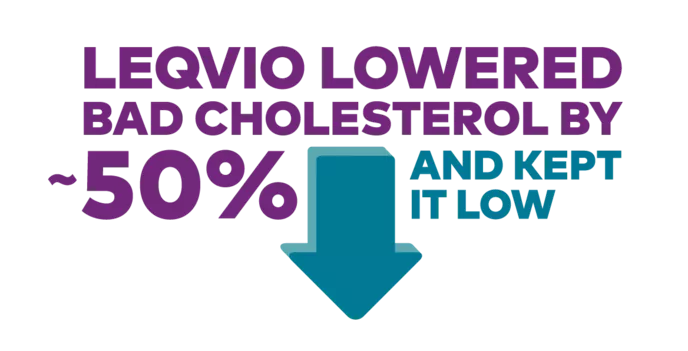
LDL-C (low-density lipoprotein cholesterol) was observed to decrease by around 50% on average.
Importantly, during each 6-month dosing interval,
levels were maintained in a relatively stable range.
From a mechanistic perspective, this reflects not only a reduction,
but also the ability to maintain that reduction over time.
Beyond Reduction: Can Levels Be Maintained Within Target Range?
Beyond numerical change, a key question is:
Can cholesterol levels be sustained within recommended ranges?
In the same set of studies:
Approximately 80% of participants reached target levels (<70 mg/dL) at around 17 months
Compared to about 20% in the control group.
This highlights an important distinction:
The difference lies not just in initial reduction, but in long-term maintenance.
Long-Term Data: Is the Stability Sustained?
In extended follow-up data (up to over 4 years):
LDL-C levels remained consistently lower
A majority of individuals stayed near target ranges
From a metabolic regulation perspective, this suggests:
A pattern of sustained adjustment rather than a one-time effect.
Why Can It Be Maintained Every 6 Months?
One of the key features of LEQVIO is its dosing schedule:
After the initial two doses, it is administered once every 6 months.
From a cellular perspective:
It works by influencing regulatory signals within the liver
Leading to a sustained modulation of specific protein production over time
As a result:
Each administration may support metabolic regulation over an extended period
This forms the basis of its low-frequency management approach.

“My [bad] cholesterol went down. It was amazing.”
– Cindy M., LEQVIO patient compensated for her time
Individual results may vary.
Safety Profile: How Should Common Reactions Be Viewed?
In clinical observations:
Most reported effects were mild to moderate.
Commonly observed reactions included:
Injection site reactions (around 8%)
Joint discomfort (around 5%)
Cold-like symptoms (around 4%)
Additionally:
Approximately 2.5% discontinued due to related effects.
These figures reflect population-level observations
and may not predict individual experiences.
How to Understand Suitable Populations?
Based on available information, this type of approach is generally considered for individuals who:
Still require additional support beyond lifestyle adjustments
For example:
Persistently elevated cholesterol levels
Presence of certain risk factors
Difficulty maintaining stable lipid levels
However, suitability should always be assessed on an individual basis.
Where Does It Fit in Overall Management?
From a broader perspective, cholesterol management may be viewed in layers:
Lifestyle → foundational metabolic support
Conventional approaches → ongoing regulation
Long-acting mechanisms (such as LEQVIO) → rhythm-based management
In some cases, under professional evaluation, individuals may explore long-acting lipid management approaches (such as LEQVIO-related strategies) as part of an overall health management plan.
Conclusion: Understanding Long-Term Management Through Data
Looking at clinical data, a clear trend emerges:
Cholesterol management is evolving from short-term change
toward long-term stability.
Approaches like LEQVIO offer a way to understand lipid balance
from the perspective of cellular regulation and metabolic rhythm.
Ultimately, what matters is not a single point of change,
but whether balance can be maintained over time.
Disclaimer:
The information provided in this article is for educational and informational purposes only. It is not intended to diagnose, treat, cure, or prevent any disease, nor should it replace professional medical advice. Readers are encouraged to consult with a qualified healthcare provider or integrative oncology specialist before making any changes to their diet, treatment plan, or lifestyle based on the content herein. Therapies and tests mentioned, including immune or integrative treatments, should always be…
All product names, test references, and therapy mentions are for informational context only and do not constitute endorsement. Results and experiences may vary among individuals.