Supporting Clearer, More Scientifically-Based Treatment Decisions
This plan aims to identify treatment options with higher efficacy for your specific cancer while minimizing unnecessary side effects caused by less effective treatments, thereby improving overall treatment outcomes.
What is a Personalized Cancer Treatment Plan? What is its Clinical Value?
Cancer treatment involves several key clinical decisions, which are made by the attending physician based on clinical evaluation, imaging tests, pathology results, and current medical guidelines.
With the advancement of precision medicine, physicians can now better understand tumor characteristics at the molecular level. This additional information helps optimize treatment planning and efficacy monitoring.
A personalized cancer treatment plan combines standard medical care with tumor biological characteristics to assist in developing the most suitable treatment strategy for your individual condition. The core goal is to identify treatment options that have higher potential efficacy for your specific cancer, thereby improving treatment outcomes.
Have you ever wondered why the same cancer treatment works for some patients, but not for others?
Because every patient's cancer is unique
Even if two patients are diagnosed with the same type and stage of cancer, their tumors may behave biologically in significantly different ways. This leads to different responses to the same treatment plan in different patients. This difference primarily stems from the heterogeneity of cancer cells in the following aspects:
Proliferation and growth characteristics
Sensitivity to treatment drugs
Ability to adapt and develop resistance over time
Understanding the biological characteristics of your tumor helps the physician develop more targeted treatment strategies.
Liquid Biopsy: A New Tool for Real-Time Tumor Insights
Traditional methods of assessing treatment efficacy require waiting several weeks to months after treatment starts to evaluate via imaging or clinical signs. During this time, patients may have already experienced side effects without being able to track efficacy.
Liquid biopsy, as an emerging technology, can partially alleviate this uncertainty.
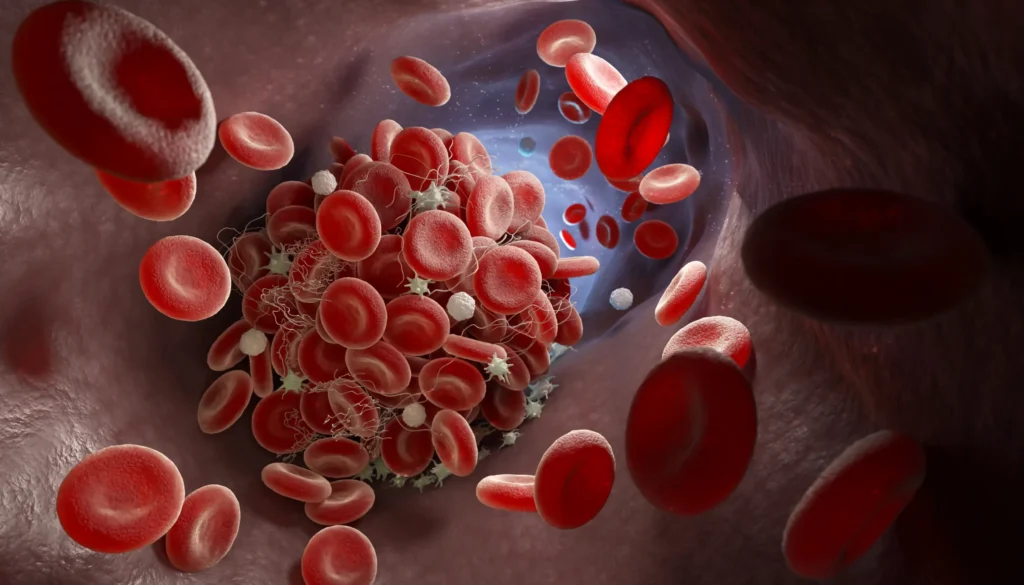
Liquid biopsy is a simple blood test that analyzes tumor-related components circulating in the blood, including Circulating Tumor Cells (CTCs)—complete tumor cells that have shed from the primary tumor or metastases into the bloodstream.
Since CTCs reflect the immediate biological activity of the tumor, they provide additional clinical information about tumor behavior at that moment.
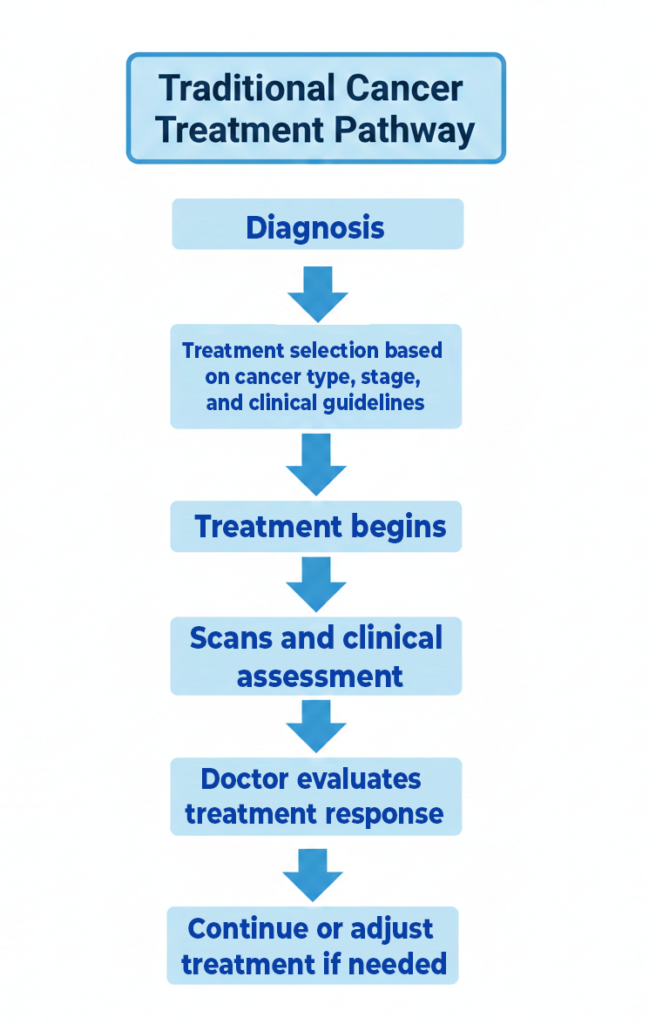
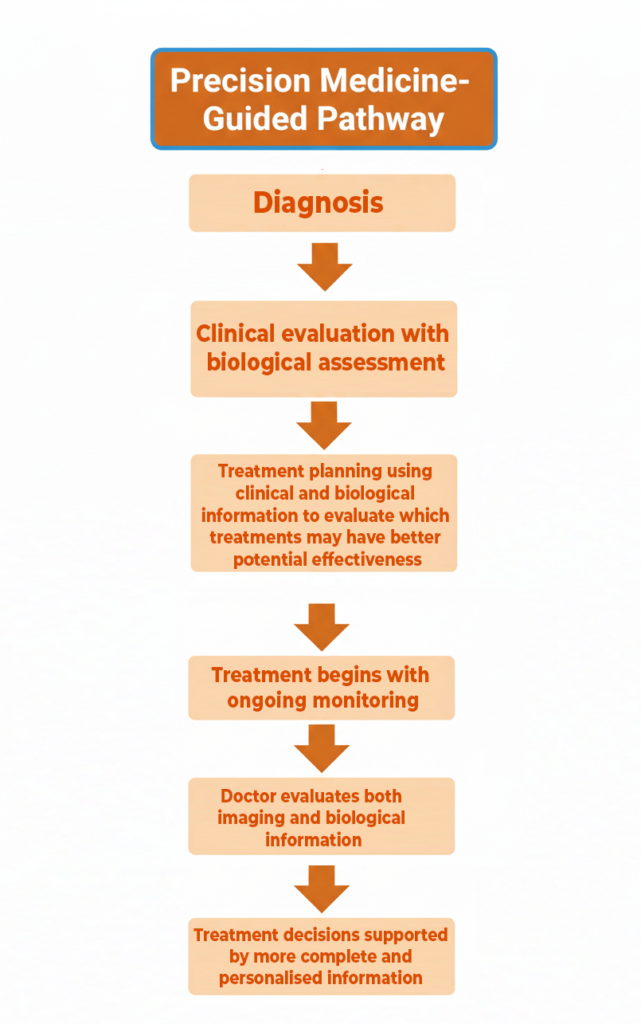
Traditional Medicine vs. Precision Medicine Pathways
Traditional cancer treatment relies mainly on clinical guidelines, imaging tests, and overall clinical evaluation to make decisions.
Precision medicine, on the other hand, further integrates tumor biological information to assist with treatment selection and sequencing.
Traditional cancer treatment relies mainly on clinical guidelines, imaging tests, and overall clinical evaluation to make decisions. Precision medicine, on the other hand, further integrates tumor biological information to assist with treatment selection and sequencing. Precision medicine provides additional molecular biology evidence to help physicians more accurately select and arrange treatment plans, thereby increasing the likelihood of choosing more effective treatments for your specific cancer and improving overall treatment results.
Clinical Benefits of Precision Medicine
Precision medicine provides insights into the molecular and biological behavior of tumors, assisting physicians to:
Gain a more comprehensive understanding of your tumor characteristics
Dynamically monitor treatment responses
Objectively evaluate efficacy
Continuously optimize treatment decisions
It complements standard cancer care, supporting more scientifically-based treatment planning.
Chemotherapy is a common systemic treatment for cancer, but patients’ responses to different chemotherapy drugs vary greatly. Precision medicine can provide additional biological insights to support chemotherapy decision-making. This information helps physicians:
Select the most suitable chemotherapy drug combinations
Monitor treatment responses in real-time
Reassess the treatment plan early when needed
Plan future treatment directions
Thus, it leads to more personalized and evidence-based treatment decisions.
About to begin chemotherapy? Click here to contact our experts for more details.
Enhance your understanding of treatment with precision medicine knowledge! Contact us via WhatsApp.
Liquid biopsy analyzes biological markers related to cancer through blood tests, which may include:
Circulating Tumor DNA (ctDNA), genetic material from cancer cells, which provides key mutation information.
Circulating Tumor Cells (CTCs), complete tumor cells that reflect tumor behavior and, in certain situations, assess drug sensitivity.
This test effectively supplements traditional imaging and other clinical assessments.
ctDNA provides
Information on tumor-related gene mutations
Tumor genome outline
ctDNA is usually present in very low amounts, especially in early-stage cancers.
CTCs provide
Complete tumor cells for analysis
Tumor biological behavior insights
Potential drug response evaluation
CTCs can be isolated from blood samples and cultured in vitro to assess their response to different anticancer drugs and natural compounds.
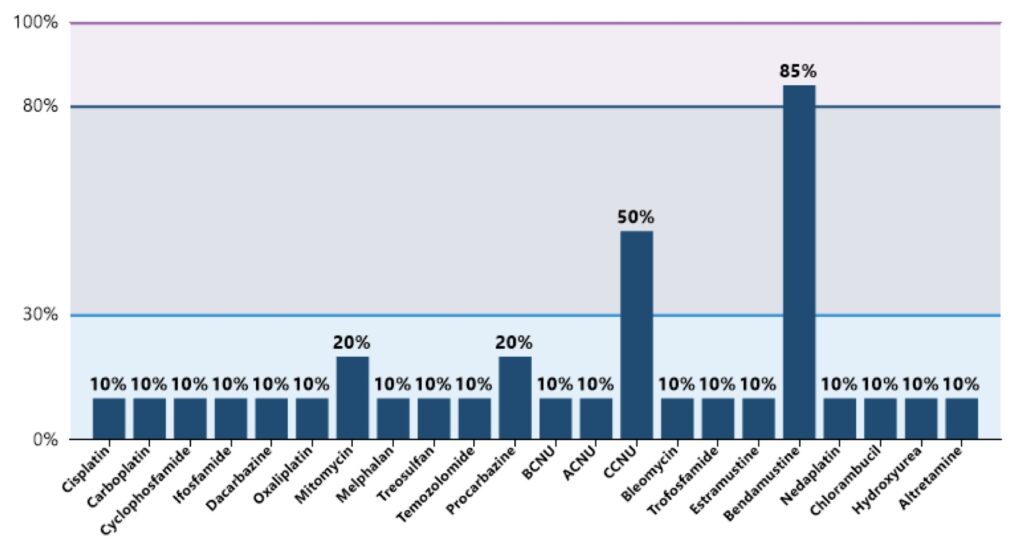
The CTC test report provides clinical value
Here’s an actual CTC test report example, showing that the chemotherapy drug Bendamustine may exhibit better inhibition effects on the patient’s specific cancer cells.
Such objective data helps medical teams and patients develop more accurate treatment plans.
Contact Our Professional Medical Team to Arrange Liquid Biopsy
Your Core Benefits
Through scientific identification of treatment options that have higher potential efficacy for your specific cancer, while minimizing unnecessary side effects from less effective treatments, you can enhance overall treatment outcomes.
Tumors may undergo biological changes during treatment. Attending physicians typically monitor the following:
Clinical evaluation
Imaging tests
Laboratory tests
Biomarker evaluation
The additional molecular information provided by precision medicine helps strengthen treatment planning and real-time monitoring capabilities.
Moving to the Next Step with More Precision
The biological information provided by precision medicine helps your physician more effectively design and adjust treatment strategies.
If you would like to evaluate whether this method is applicable to your condition, please click the button below to have a professional conversation with our experts.
Medical Disclaimer: The information provided in this article is for educational and reference purposes only and does not constitute medical advice or be used as a substitute for professional medical diagnosis, treatment, or advice. ALWAYS CONSULT ANY QUESTIONS YOU MAY HAVE ABOUT YOUR MEDICAL CONDITION OR MEDICAL PROBLEM THAT YOU HAVE ALWAYS CONSULT YOUR PHYSICIAN OR OTHER QUALIFIED HEALTH PROFESSIONAL. The content of this article is not intended to recommend any specific test, treatment, or medication and should not be construed as such. If you develop symptoms or require medical assistance, please contact a healthcare professional promptly.