Related articles

Experts share their insights on different health topics and how comprehensive healthcare solutions can treat different conditions to improve patient health.

Glutathione as an Adjunctive Therapy in Cancer Patients: Safety Considerations

Glutathione (GSH) is one of the body’s most important endogenous antioxidants,
often used as an intravenous adjunctive therapy in cancer patients to reduce oxidative stress, alleviate fatigue, and protect mitochondria, liver, and kidney function.
However, because cancer treatment is inherently complex, many patients and families worry: “Will supplementing glutathione ‘feed’ the tumour? Will it interfere with chemotherapy or radiotherapy?”
Read More »

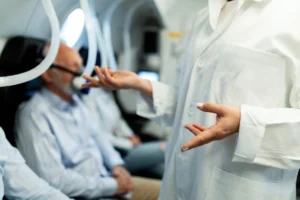
The Role of Hyperbaric Oxygen Therapy in Cancer Supportive Care

Hyperbaric oxygen therapy (HBOT) involves placing the patient in a chamber with 2–3 atmospheres of pure oxygen, dramatically increasing oxygen levels in blood and tissues.
In cancer care, it is not a primary treatment for the tumour itself but serves as a valuable supportive therapy to alleviate side effects, improve quality of life, and in some cases enhance treatment effectiveness.

Read More »

Personalised Cancer Treatment Plans: From Genetic Testing to Precision Intervention

In the past, cancer treatment was often “one-size-fits-all”:
patients with the same type of lung, breast, or colorectal cancer received largely similar protocols.
But growing evidence shows that every tumour has a unique genetic expression, signalling pathways, and drug response — as individual as a fingerprint.
Personalised treatment plans have emerged to shift care from “generally effective” to “precisely targeted”.

Read More »

The Role of Palliative Supportive Care During Cancer Treatment

Many people believe palliative supportive care is only for late-stage patients, but in reality, it can play a valuable role from the moment of diagnosis, throughout treatment, and into recovery.
Palliative supportive care is not “giving up on active treatment” — it runs alongside chemotherapy, radiotherapy, targeted therapy, or immunotherapy as a gentle ally.
Its simple goal: manage pain, side effects, and emotional burden so you can focus your energy on fighting the disease rather than battling discomfort.

Read More »

Common Symptoms of Iron Deficiency After Chemotherapy

Iron deficiency after chemotherapy is experienced by more than 50 % of patients.
Chemotherapy drugs not only suppress bone-marrow blood production but also cause gut absorption issues, chronic blood loss, or inflammatory consumption, rapidly depleting iron stores.
Iron is not just the “raw material for haemoglobin” — it is essential for oxygen transport, energy production, and immune function.
When iron is low, your body signals the need for replenishment through these symptoms.

Read More »

Vitamin D Deficiency and Its Common Association with Bone Pain

Vitamin D is not just the “sunshine vitamin” — it is essential for bone health, calcium absorption, and muscle function.
When vitamin D levels are low, bone pain is often one of the earliest and most noticeable warning signs.
This is not simply “ageing” or “overwork” — it is your body signalling “I lack the raw materials to repair my bones”.

Read More »

Common Stages of Hypoalbuminemia After Cancer Treatment 

Hypoalbuminemia (serum albumin <3.5 g/dL) is one of the most common nutritional issues during and after cancer treatment. It is not just a “low number” — it can lead to oedema, fatigue, slow wound healing, reduced immunity, and even affect the ability to continue treatment. Understanding the typical stages when it occurs allows you and your physician to prevent and manage it proactively.

Read More »

Common Reasons for Loss of Appetite After Cancer Treatment

After cancer treatment ends, many patients find that “appetite just doesn’t come back”:
food looks unappealing, a few bites feel filling, or even the smell triggers nausea.
This is not due to “lack of effort” — it is the result of treatment affecting multiple body systems and temporarily disrupting appetite regulation.
Understanding these common causes can reduce self-blame and open the door to more targeted ways to improve.

Read More »

How to Help a Loved One with Cancer When They Are Feeling Low

Walking through this valley together with the gentlest care
When a family member is diagnosed with cancer, you may notice they no longer laugh as easily, talk less, sleep poorly, or sometimes fall silent or tear up unexpectedly.
These low moods are completely normal — they are not only facing the illness itself, but also the uncertainty, loss of control, and guilt towards family.
As a caregiver, your role is not to “force them to cheer up”, but to let them know: their feelings are seen, accepted, and allowed to exist.

Read More »