Related articles

Experts share their insights on different health topics and how comprehensive healthcare solutions can treat different conditions to improve patient health.

The Significance of Natural Antioxidants in Cancer Supportive Care

Helping you understand “how these antioxidants can truly support your treatment”
During cancer treatment, chemotherapy, radiotherapy, and targeted therapy target the tumour but also generate large amounts of free radicals and reactive oxygen species, causing damage to normal cells, fatigue, neurotoxicity, and immune suppression.
Natural antioxidants (such as vitamin C, glutathione, alpha-lipoic acid, curcumin, Reishi polysaccharides, quercetin, etc.) play a key role in supportive therapy.
They not only quickly neutralise free radicals and reactive oxygen species produced during treatment but also act from multiple angles — cellular energy, neuroprotection, inflammation regulation, and immune balance — helping the body stay as stable as possible under high-intensity treatment, allowing patients to endure side effects with more strength, maintain tolerance, and improve overall quality of life.

Read More »

The Role of Reishi Mushroom Extract in Cancer Supportive Therapy

Helping you understand “how Reishi can gently support your treatment journey”
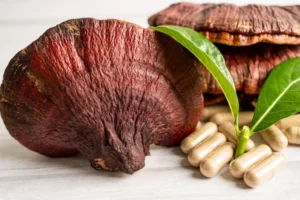
Reishi mushroom (Ganoderma lucidum), a traditional Chinese medicinal herb, has gained attention in recent years for its extracts (primarily polysaccharides and triterpenoids) in cancer supportive care.
It is not an “anti-cancer drug”, but rather a supportive option that helps reduce treatment side effects, boost immunity, and improve tolerance, allowing patients to have more strength during chemotherapy, radiotherapy, or targeted therapy.
The effects of Reishi extract mainly stem from its antioxidant, anti-inflammatory, and immunomodulatory properties, with clinical studies showing it can provide gentle benefits for cancer patients.

Read More »

The Personalized Significance of Omega-3 for Cancer Patients

Helping you understand “how Omega-3 can truly benefit you — not a one-size-fits-all solution”
During or after cancer treatment, many patients are advised to supplement Omega-3 (fish oil, EPA/DHA) due to its anti-inflammatory, cardiovascular, and neuroprotective effects.
However, the reality is that Omega-3’s significance varies greatly from one cancer patient to another:
Some experience noticeable relief from fatigue, reduced inflammation, and improved quality of life;
Others may feel little benefit, or in certain cases, need to use it with caution.
The true value of Omega-3 lies in personalization — understanding your tumour’s real response to it is key to making supplementation genuinely helpful.

Read More »

How Curcumin Helps Improve Tolerance to Cancer Treatment?

During cancer treatment, the most common challenge patients face is “side effects are too heavy to endure”.
Chemotherapy, radiotherapy, or targeted therapy, while targeting the tumor, often bring nausea, fatigue, nerve pain, inflammation, and immune suppression, leading to dose reduction, delays, or interruption of the course.
Curcumin, the main active ingredient of turmeric, has been widely studied in cancer supportive care in recent years,
and one of its most valued benefits is helping patients “have more strength to withstand treatment”, enhancing overall tolerance.

Read More »

Why Do Tumor Patients Experience Obvious Muscle Loss?

Many cancer patients, during or after treatment, face one of the most overlooked yet most impactful issues: “muscle loss” (Sarcopenia or Cancer Cachexia-related muscle wasting).
This is not simply “getting thinner” or “lack of exercise” — it is a comprehensive attack by the tumor itself and the treatment process on muscle tissue, causing rapid decline in muscle mass and strength.
When muscle loss becomes obvious, patients not only lose physical strength and have difficulty walking, but it also affects treatment tolerance, wound healing, and overall quality of life, even increasing the risk of complications.

Read More »

Cancer Supportive Therapy Comprehensive Options

Making the treatment journey smoother and quality of life higher
During cancer treatment — chemotherapy, radiotherapy, targeted therapy, or immunotherapy — while the focus is on targeting the tumour, side effects such as fatigue, toxicity, nerve damage, nutrient loss, and immune suppression often impact tolerance and daily living.
The goal of supportive therapy is to provide scientific, safe, and gentle assistance without interfering with primary treatment, helping patients have the strength to complete their course.
Below is a summary of the most commonly used and relatively safe supportive options in cancer care, all of which must be evaluated and prescribed by a specialist oncologist.

Read More »

How to Help Your Body Truly Absorb Nutrition After Chemotherapy

From “Eating Without Benefit” to “Every Bite Supporting Recovery”
After chemotherapy, radiotherapy, or surgery, many people find themselves stuck in a frustrating and confusing cycle:
“I’m doing my best to eat—so why am I still losing weight?”
“Why does it feel like the food I eat isn’t really helping my body?”
This is not simply a matter of poor appetite or insufficient effort.
Cancer-related treatments can have long-lasting effects on the digestive system, metabolism, and gut function, making nutrient absorption far more difficult than before.
When these challenges are properly understood and nutritional support is adjusted with precision and care, each meal can become more meaningful—and the body’s recovery process can gradually regain momentum.

Read More »

Why Are More and More Cancer Patients Discussing RGCC OncoTrace Testing?

After a cancer diagnosis, the one question that weighs most heavily on patients and families is always the same: “Will recurrence come sooner than expected?”
Traditional follow-up methods, while reliable, often leave people in a state of “passive waiting” anxiety:
Tumour markers (CEA, CA19-9, CA125, etc.) are prone to false positives due to inflammation or infection;
Imaging (CT, PET-CT) only detects tumours once they have grown to a certain size.
This means that early recurrence signals may already be present long before any confirmation is possible.

Read More »

Common Challenges in Nutrient Absorption After Cancer Treatment

Understanding why “eating more doesn’t always mean absorbing more”—and discovering gentler ways forward

After completing cancer treatment, many patients notice something frustrating:
“I’m really trying to eat, yet my weight keeps dropping.”

This is not a matter of “not trying hard enough.” Rather, long-term effects of treatment on the digestive system and metabolism can make nutrient absorption unusually difficult.
Understanding these common challenges allows you and your care team to intervene earlier—so the nutrients you take in can truly be used by your body.

Read More »