
Comprehensive Organic Acids Metabolic Analysis
Understand Your Body Through Metabolic Insights
A Deeper Look into Cellular Function & Nutritional Status
Metabolism plays a fundamental role in maintaining the body’s overall function, energy production, and nutritional balance.
By analyzing organic acid metabolites in urine, this assessment provides insights into various metabolic pathways at the cellular level, offering a more comprehensive understanding of overall body function and metabolic status.
Organic Acids Testing (OAT) is widely used in nutritional and functional medicine as a supportive tool for evaluating metabolic balance and nutritional utilization.
Key Focus Areas & Metabolic Insights in Comprehensive Organic Acids Analysis
Under the influence of stress, dietary habits, lifestyle patterns, and environmental factors, the body’s metabolic rhythm may gradually shift, potentially affecting energy production, nutrient utilization, and overall balance, often reflected through changes in daily condition and well-being.
BMS Clinic utilizes advanced urine-based organic acid analysis to help evaluate various metabolic pathways at the cellular level, providing systematic insights into energy metabolism, nutritional status, and overall metabolic balance.
We commonly focus on the following conditions:
• Reduced energy levels, fatigue, or slower recovery
• Digestive fluctuations (such as bloating, reflux, or gastrointestinal discomfort)
• Changes in mood, stress response, or concentration
• Imbalances in nutrient utilization and energy conversion
• Increased oxidative stress affecting overall body balance
Organic acids are metabolic byproducts naturally produced during the body’s biochemical processes.
As the body converts nutrients into energy, regulates cellular activity, and maintains metabolic balance, different types of organic acids are generated.
By analyzing variations in urinary organic acid levels, this test may provide insights into multiple metabolic pathways, including:
- Energy production and utilization
- Nutrient metabolism
- Gut microbiome activity
- Oxidative stress balance
- Neurotransmitter-related metabolism
- Detoxification and metabolic processes
When certain metabolic pathways become less efficient, some metabolites may accumulate or change, which can be reflected in the test results.
What is Organic Acids Metabolic Testing?
Efficiency of metabolism
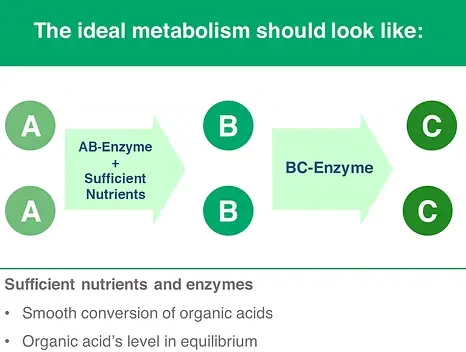

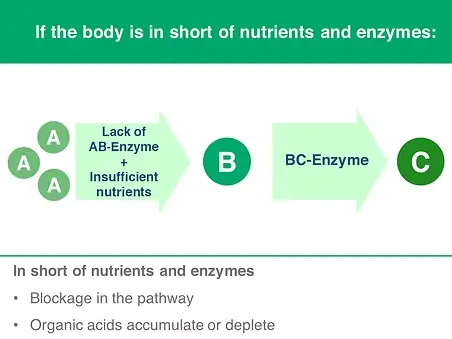
Metabolism is closely connected to many aspects of overall health, including:
- Nutrient absorption and utilization
- Energy conversion efficiency
- Physiological balance and regulation
- Adaptation to stress and environmental factors
- Cellular metabolic activity
When metabolic pathways are not functioning optimally, they may be associated with:
- Persistent fatigue or low energy
- Digestive discomfort (such as bloating or acid reflux)
- Mood fluctuations or stress-related concerns
- Reduced concentration or mental clarity
- Recurring skin concerns or chronic discomfort
- Difficulty managing body weight
These conditions may involve multiple contributing factors and are not linked to a single cause. Organic acids metabolic analysis serves as a supportive reference tool for understanding overall metabolic function.
Why is Metabolic Health Important?
Test Coverage (62 Organic Acid Markers)
This assessment includes up to 62 organic acid biomarkers across several key metabolic categories:
1. Energy Metabolism
- Carbohydrate metabolism
- Protein metabolism
- Fat metabolism
- Glycolysis and energy cycles (such as the Citric Acid Cycle)
- B-vitamin and cofactor-related metabolism
Helps evaluate how the body converts nutrients into energy
2. Neurotransmitter-Related Metabolism
Includes pathways associated with neurotransmitter activity, such as:
- Dopamine-related metabolism
- Serotonin-related metabolism
Provides supportive insights into metabolism related to mood and cognitive function
3. Oxidative Stress & Antioxidant Capacity
- Free radical-related metabolic activity
- Antioxidant-related markers
Reflects the body’s ability to respond to oxidative stress
4. Detoxification & Metabolic Processing
- Endogenous metabolic byproducts
- Environmental and external metabolic compounds
Helps assess overall metabolic processing and elimination pathways
5. Gut Microbiome Metabolism
- Gut flora-related metabolites
- Bacterial metabolic markers
- Yeast and fungal-related metabolites
Provides reference information regarding gut microbial balance
6. Oxalate Metabolism
- Oxalate-related metabolic markers
Associated with specific metabolic pathways and internal balance
7. Nutritional Markers
- Nutrients involved in energy production
- Coenzyme and metabolic cofactor-related indicators
Helps evaluate nutritional utilization and metabolic balance
Who May Benefit From This Test?
This assessment may be suitable for individuals who:
- Are interested in understanding their metabolic health
- Frequently experience fatigue or low energy
- Have digestive concerns
- Experience stress or mood fluctuations
- Want to better understand nutrient utilization
- Are focusing on weight management and metabolic balance
- Wish to learn more about gut health and microbiome balance

Testing Process
.png)
- Analysis of up to 62 metabolic markers
- Covers multiple important metabolic pathways
- Uses standardized laboratory testing technologies
- Clear and easy-to-understand reporting format
- Provides personalized nutritional and wellness reference insights
Key Features
Important Disclaimer
- This assessment is intended as a health evaluation tool and not for diagnostic purposes
- Results should be interpreted by qualified professionals alongside individual health conditions
- Results may vary between individuals
- Findings should be considered together with other health assessments and clinical information
- This test should not replace professional medical advice or clinical evaluation
Medical Disclaimer:
The information provided in this article is for educational and reference purposes only and does not constitute medical advice or be used as a substitute for professional medical diagnosis, treatment, or advice. ALWAYS CONSULT ANY QUESTIONS YOU MAY HAVE ABOUT YOUR MEDICAL CONDITION OR MEDICAL PROBLEM THAT YOU HAVE ALWAYS CONSULT YOUR PHYSICIAN OR OTHER QUALIFIED HEALTH PROFESSIONAL. The content of this article is not intended to recommend any specific test, treatment, or medication and should not be construed as such. If you develop symptoms or require medical assistance, please contact a healthcare professional promptly.
References
Research on Organic Acid Metabolism Analysis and Metabolomics:
- Analysis of urinary organic acids by gas chromatography tandem mass spectrometry method for metabolic profiling applications. Journal of Chromatography A. 2021;1658:462590.
- Körver-Keularts IMLW, et al. Fast and accurate quantitative organic acid analysis with LC-QTOF/MS facilitates screening of patients for inborn errors of metabolism. Journal of Inherited Metabolic Disease. 2018;41:415–424.
- Gallagher RC, Pollard L, Scott AI, et al. Laboratory analysis of organic acids, 2018 update: a technical standard of the American College of Medical Genetics and Genomics (ACMG). Genetics in Medicine. 2018;20:683–691.
Research on Organic Acid Testing and Energy Metabolism Pathway Assessment:
- Körver-Keularts IMLW, et al. Fast and accurate quantitative organic acid analysis with LC-QTOF/MS facilitates screening of patients for inborn errors of metabolism. Journal of Inherited Metabolic Disease. 2018;41:415–424.
- Analysis of urinary organic acids by gas chromatography tandem mass spectrometry method for metabolic profiling applications. Journal of Chromatography A. 2021;1658:462590.
- Patti GJ, Yanes O, Siuzdak G. Innovation: Metabolomics and the role of mass spectrometry in metabolic profiling. Cell Metabolism. 2012;16(3):333–344.
Research on Organic Acid Metabolism and Mitochondrial Function:
- Spinelli JB, Haigis MC. The multifaceted contributions of mitochondria to cellular metabolism. Nature Cell Biology. 2018;20:745–754.
- Chandel NS. Mitochondria as signaling organelles. BMC Biology. 2014;12:34.
- Spinelli JB, Mills EL, Ferrer CM, et al. Mitochondrial metabolism and cancer cell function. Nature Reviews Molecular Cell Biology. 2021.
Research on Organic Acid Metabolism and Nutritional Status Assessment:
- König J, Wells J, Cani PD, et al. Gut microbiota and metabolic health: current understanding and future perspectives. Clinical Nutrition. 2021.
- Liu Y, et al. Metabolomics in nutritional research: current applications and future perspectives. Advances in Nutrition. 2017.
- Gao X, et al. Metabolomics approaches for nutritional assessment and personalized nutrition. Nutrition. 2018.
Research on Urinary Organic Acid Analysis and Comprehensive Metabolic Assessment:
- Rapid and efficient LC-MS/MS diagnosis of inherited metabolic disorders using urinary organic acids, acylcarnitines and acylglycines. Clinical Chemistry and Laboratory Medicine. 2023.
- Urine organic acids may be useful biomarkers for metabolic syndrome and its components in Korean adults. Clinical Chemistry and Laboratory Medicine. 2021.
- Lord RS, Bralley JA. Clinical applications of urinary organic acids. Part 2. Dysbiosis markers. Alternative Medicine Review. 2008;13(4):292–306.