
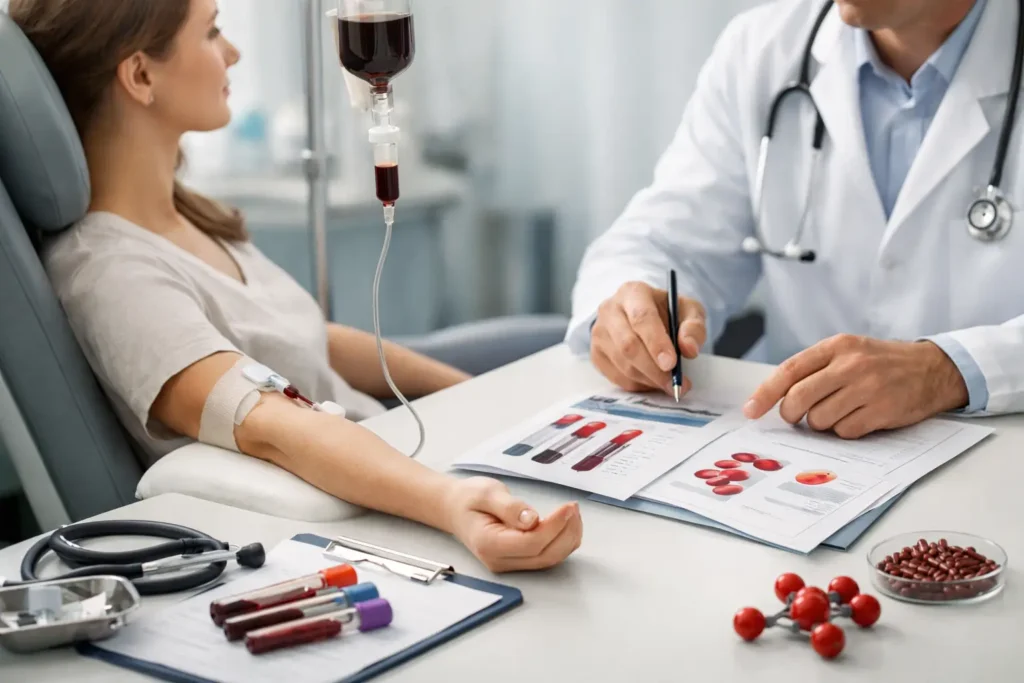
Even after getting enough sleep, you may still feel short of breath easily, experience a racing heart, dizziness, and a clear drop in work concentration. The problem may not simply be stress or insufficient sleep. Iron deficiency and iron-deficiency anemia can affect oxygen delivery, muscle endurance, cognitive performance, and recovery speed. Many people ask: Who is intravenous iron suitable for? The answer is not “anyone who feels tired can get an iron infusion.” It requires first confirming true iron deficiency, identifying the cause, and determining whether the body needs faster or more efficient iron replenishment.
Intravenous iron is administered by healthcare professionals via infusion into a vein, allowing iron to enter the bloodstream directly for the body to produce hemoglobin and store it. It is not a general wellness drip and cannot replace identifying the root causes of blood loss, malabsorption, or chronic inflammation. Appropriate treatment should be decided jointly based on blood tests, medical history, ongoing treatments, and individual symptoms.
Who is intravenous iron suitable for? First confirm a clear need for iron supplementation
The most common situation is confirmed iron-deficiency anemia where oral iron has not produced ideal results. Doctors usually assess a combination of hemoglobin, serum ferritin, transferrin saturation, mean corpuscular volume, and inflammatory markers. Looking at low hemoglobin alone is not enough, because anemia can also stem from vitamin B12 or folate deficiency, kidney problems, bone marrow disorders, chronic inflammation, or other causes.
In some people, ferritin may not be very low, yet functional iron deficiency still exists. This is common in chronic inflammation, kidney disease, or cancer-related conditions: the body has iron stores, but the iron cannot be effectively mobilized to produce red blood cells. These cases especially require a doctor to interpret the test results rather than self-supplementing based on a single number.
The following groups are more likely to need discussion of intravenous iron therapy:
- Confirmed iron-deficiency anemia where blood indicators show little improvement after taking oral iron.
- Nausea, stomach pain, acid reflux, constipation, or diarrhea after taking iron tablets, making it difficult to complete the course.
- Gastrointestinal surgery, inflammatory bowel disease, celiac disease, or long-term absorption problems that limit oral iron absorption.
- Significantly heavy menstrual periods, uterine fibroids, gastrointestinal bleeding, or other ongoing blood loss that requires more efficient replenishment of iron stores.
- Undergoing cancer treatment,守住體力、營養/, before or after surgery, or during recovery, where the medical team assesses a need to improve iron deficiency and anemia support.
- Chronic kidney disease, particularly those receiving erythropoiesis-stimulating agents, with iron supplementation arranged by a nephrologist or attending physician.
Why oral iron may not be enough
Oral iron is usually the common starting point for iron deficiency. Its advantages are convenience, relatively lower cost, and suitability for many people with mild deficiency. However, absorption of oral iron is affected by diet, stomach acid, intestinal function, and how it is taken, and it is often limited by gastrointestinal side effects. Some people take it every other day, reduce the dose, or stop altogether because of discomfort, resulting in insufficient actual intake and absorption.
The advantage of intravenous iron is that it bypasses gastrointestinal absorption barriers and, after the doctor calculates the required iron amount, replenishes stores more concentratedly. For people with more pronounced symptoms, those who need to align with a treatment timeline, or those for whom oral regimens have failed multiple times, this may be a more suitable option. However, “faster iron replenishment” does not mean all fatigue will disappear immediately. Red blood cell production, tissue repair, and recovery of energy all take time. If fatigue is also related to sleep, thyroid issues, infection, emotional stress, or side effects of cancer treatment, these need to be addressed together.
Can cancer patients use intravenous iron? More precise assessment is needed
Anemia is common in cancer patients, but the causes are often multiple. Chronic inflammation caused by the tumor itself, effects of chemotherapy on the bone marrow, reduced appetite, surgical blood loss, gastrointestinal absorption problems, and treatment-related nausea or mucositis can all play a role. Therefore, iron should not be supplemented simply because hemoglobin has dropped.
When tests show iron deficiency or functional iron deficiency, the attending physician may consider intravenous iron as part of integrative supportive care. The goals are to support red blood cell production, improve fatigue and activity endurance caused by iron deficiency, and help the patient complete planned treatments more stably. If the patient is also using erythropoiesis-stimulating agents, preparing for surgery, or needs transfusion, the iron plan should be coordinated with oncology, surgery, or related specialties.
Equally important: intravenous iron is not an anti-cancer treatment and cannot replace chemotherapy, targeted therapy, immunotherapy, radiotherapy, or surgery. For cancer patients, the real value lies in considering nutritional status, causes of anemia, inflammation, treatment side effects, and quality of life within the same care plan.
What tests should be done before treatment? Identify the underlying cause of iron deficiency
Assessment before iron supplementation should not stop at “iron is low.” The doctor will inquire about how long symptoms have lasted, menstrual patterns, dietary restrictions, gastrointestinal discomfort, stool color, previous gastrointestinal surgery, and family history. For men, postmenopausal women, or those with unexplained iron deficiency, the possibility of chronic gastrointestinal blood loss deserves particular attention and should not be overlooked just because numbers improve after supplementation.
Common tests include complete blood count, hemoglobin, ferritin, transferrin saturation, kidney function, liver function, and inflammatory markers. Depending on the individual, assessment of vitamin B12, folate, thyroid function, fecal occult blood, or gynecological issues may also be needed. These data help the doctor distinguish simple iron deficiency, mixed anemia, or situations that require priority treatment of a bleeding source or chronic disease.
At BMS Clinic, intravenous nutrition and supportive treatments are based on medical assessment and personalized test results, so that iron supplementation is not just a response to a lab report, but is arranged according to the patient’s recovery needs, chronic disease risks, and overall quality of life.
Is the infusion process safe? What risks should be noted
Current intravenous iron preparations have mature clinical experience, but any intravenous treatment should be performed in an environment with medical monitoring. Before infusion, healthcare staff will check medical history, allergies, current medications, infection status, and previous iron treatment records. During infusion, blood pressure, heart rate, and any discomfort are observed.
Some people may experience temporary headache, nausea, flushing, muscle or joint discomfort, or a metallic taste in the mouth; these usually improve with rest or adjustment of the infusion rate. Although severe allergic reactions are uncommon, the ability to provide immediate medical management is still required. If leakage occurs at the infusion site, iron can cause skin pigmentation, so any stinging, burning, or swelling should be reported to staff immediately.
Not everyone is suitable for intravenous iron. Known iron overload, certain non-iron-deficiency anemias, a history of severe allergy to iron preparations, or an acute infection that needs priority treatment may lead the doctor to postpone, adjust, or not recommend the therapy. The key to the treatment decision is not “whether it can be given,” but whether the expected benefit outweighs the risk.
How to follow up after iron supplementation to truly restore energy
After completing the infusion, patients usually need to recheck blood indicators according to the doctor’s advice to confirm whether hemoglobin has risen, iron stores have been replenished, and whether original symptoms of fatigue, heart palpitations, shortness of breath, or exercise endurance have improved. The timing of follow-up depends on the iron preparation used, the degree of anemia, and whether ongoing blood loss continues; testing immediately after infusion will not reflect the final effect.
If heavy menstrual bleeding, peptic ulcers, hemorrhoidal bleeding, insufficient dietary intake, or chronic inflammation remain unaddressed, iron stores may decline again. In such cases, ongoing monitoring and treating the root cause support long-term health better than repeated one-off iron infusions. For those receiving cancer treatment or living with multiple chronic conditions, nutrition, sleep, kidney function, cardiovascular status, and emotional support also influence the pace of recovery.
When fatigue begins to limit your work, family life, or treatment tolerance, there is no need to accept it as inevitable. Finding the cause through appropriate testing and discussing with the medical team whether oral or intravenous iron is suitable is often a practical starting point for rebuilding energy and restoring daily rhythm.