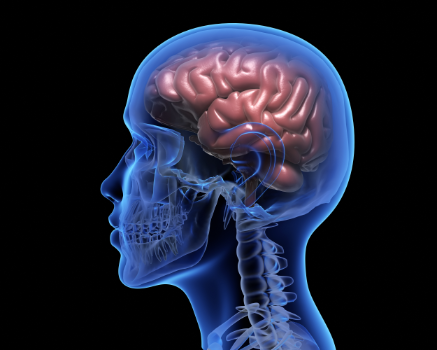




BMS 认知评估检测:提早守护记忆健康
科学验证 | 简单抽血 | 5–10个工作天出报告
认知健康的重要性
随着人口老龄化,认知障碍症逐渐成为全球关注的健康挑战。阿兹海默症作为最常见的一种类型,往往在早期没有明显症状,导致许多患者延迟发现。世界卫生组织指出,全球约 9% 的认知障碍属于早发性类型,而在 65 岁以后,每增加五年,患病率就会翻倍。透过 BMS 认知评估检测,可以在轻度认知障碍(MCI)阶段就洞察风险,提早采取措施,为健康争取更多主动权。
检测技术与核心原理
BMS 认知评估检测的核心是检测血液中的 p-Tau217 蛋白。这是一种与阿兹海默症病变密切相关的生物标记物。当神经细胞异常时,Tau 蛋白会变性并形成沉积,最终损害脑部功能。
本检测采用 Simoa 单分子检测技术,能精准捕捉极低浓度的 p-Tau217 变化,并已获得美国 FDA 认定为突破性医疗器材。研究表明,结果与脑部 PET 扫描与脑脊髓液检测高度一致。
准确度与信赖性
与传统影像学检测相比,BMS 认知评估检测仅需简单抽血,却能提供高度可信的数据支持。根据临床研究,其灵敏度约 98.2%,特异性约 98.6%,能精准反映不同阶段的风险状态。检测过程非侵入性,且报告最快可于 5–10 个工作天 内出具,既快捷又方便。
检测流程
- 步骤 1:线上或电话预约检测
- 步骤 2:前往BMS抽血点进行抽血
- 步骤 3:样本送至本港认可化验所分析
- 步骤 4:5–10 个工作天出具报告
适合检测的人群
- 40 岁或以上人士
- 有阿兹海默症家族史
- APOE4 基因携带者
- 高危慢性病患者(高血压、高血脂、糖尿病等)
- 曾中风或脑外伤人士
- 长期生活压力大或有抑郁倾向者
APOE 基因检测
APOE 基因与阿兹海默症有显著关联,其中 APOE4 基因携带者 的风险比一般人高 2–26 倍,甚至可能在 55–65 岁提前出现症状。 BMS 认知评估的 APOE 基因检测,能帮助受测者了解自身遗传风险,并作为健康管理的重要参考。需要注意的是,基因检测结果仅代表潜在风险,而非确诊,发病仍受环境与生活方式影响。
健康管理与生活方式建议
无论检测结果如何,保持良好生活习惯始终是维护大脑健康的基础:
- 健康饮食:摄取抗氧化物、Omega-3 脂肪酸,支持大脑功能
- 优质睡眠:促进记忆巩固
- 规律运动:加强血液循环与代谢
- 认知训练:阅读、益智游戏,保持脑部活力
配合检测结果,这些措施能为认知健康提供更全面的保障。
常见问题(FAQ)
检测是否等同于诊断?
检测结果仅反映风险状态,不能作为临床诊断依据。多久需要检测一次?
建议根据年龄与风险因素定期追踪。基因结果是否代表必然发病?
并非如此,发病与多重因素相关,包括基因、环境及生活方式。报告多久出?
一般为 5–10 个工作日。
参考文献
认知功能评估与认知障碍筛查相关研究:
- Nasreddine ZS, Phillips NA, Bédirian V, et al. The Montreal Cognitive Assessment, MoCA: a brief screening tool for mild cognitive impairment. Journal of the American Geriatrics Society. 2005;53(4):695–699.
- Folstein MF, Folstein SE, McHugh PR. “Mini-mental state”: a practical method for grading the cognitive state of patients for the clinician. Journal of Psychiatric Research. 1975;12(3):189–198.
- Wang X, Li F, Gao Q, et al. Evaluation of the Accuracy of Cognitive Screening Tests in Detecting Dementia Associated with Alzheimer’s Disease: A Hierarchical Bayesian Latent Class Meta-Analysis. Journal of Alzheimer’s Disease. 2022;87(1):1–13.
轻度认知障碍(MCI)与早期认知退化评估研究:
- Pinto TCC, Machado L, Bulgacov TM, et al. Is the Montreal Cognitive Assessment (MoCA) screening superior to the Mini-Mental State Examination (MMSE) in the detection of mild cognitive impairment (MCI) and Alzheimer’s Disease (AD) in the elderly? International Psychogeriatrics. 2019;31(4):491–504.
- Lu Y, Li X, Zhang L, et al. Comparing the Sensitivity, Specificity, and Predictive Values of the Montreal Cognitive Assessment and Mini-Mental State Examination When Screening People for Mild Cognitive Impairment and Dementia in Chinese Population. Archives of Psychiatric Nursing. 2016;30(4):486–491.
- Albert MS, DeKosky ST, Dickson D, et al. The diagnosis of mild cognitive impairment due to Alzheimer’s disease: Recommendations from the National Institute on Aging-Alzheimer’s Association workgroups on diagnostic guidelines for Alzheimer’s disease. Alzheimer’s & Dementia. 2011;7(3):270–279.
阿尔茨海默病与神经认知功能评估相关研究:
- McKhann GM, Knopman DS, Chertkow H, et al. The diagnosis of dementia due to Alzheimer’s disease: Recommendations from the National Institute on Aging-Alzheimer’s Association workgroups. Alzheimer’s & Dementia. 2011;7(3):263–269.
- Jack CR Jr, Bennett DA, Blennow K, et al. Introduction to the recommendations from the National Institute on Aging-Alzheimer’s Association workgroups on diagnostic guidelines for Alzheimer’s disease. Alzheimer’s & Dementia. 2018;14(4):535–562.
- Livingston G, Sommerlad A, Orgeta V, et al. Dementia prevention, intervention, and care. The Lancet. 2017;390(10113):2673–2734.
神经心理测试与认知能力综合评估相关研究:
- Teng E, Becker BW, Woo E, et al. Utility of the Montreal Cognitive Assessment in detecting cognitive impairment in older adults. Neuropsychologia. 2013;51(3):490–496.
- Julayanont P, Phillips N, Chertkow H, Nasreddine ZS. The Montreal Cognitive Assessment (MoCA): concept and clinical review. Geriatric Psychiatry. 2013.
- Jack CR Jr, Knopman DS, Jagust WJ, et al. Tracking pathophysiological processes in Alzheimer’s disease: an updated hypothetical model of dynamic biomarkers. Alzheimer’s & Dementia. 2013;9(1):1–15.
认知健康管理与早期干预相关研究:
- Livingston G, Huntley J, Sommerlad A, et al. Dementia prevention, intervention, and care: 2020 report of the Lancet Commission. The Lancet. 2020;396(10248):413–446.
- Cummings J, Lee G, Zhong K, et al. Alzheimer's disease drug development pipeline: 2020. Alzheimer’s & Dementia. 2020;6(1):e12050.
- Livingston G, Sommerlad A, Orgeta V, et al. Dementia prevention, intervention, and care. The Lancet. 2017;390(10113):2673–2734.