Vitamin B Complex
Involved in normal energy metabolism and nervous system function. Its nutritional role does not mean intravenous supplementation can accelerate alcohol metabolism.

Hangover IV Therapy is based on a reference formulation containing Vitamin B Complex, Vitamin B12, Vitamin C, and components described as anti-nausea and anti-inflammatory agents. Symptoms following alcohol consumption, such as nausea, headache, fatigue or dehydration, may involve several physiological factors. At BMS Clinic, we prioritise medical assessment and medication safety. Our doctors review individual symptoms, recent alcohol consumption and medical history to determine whether medical support, fluid replacement or other appropriate care is needed.
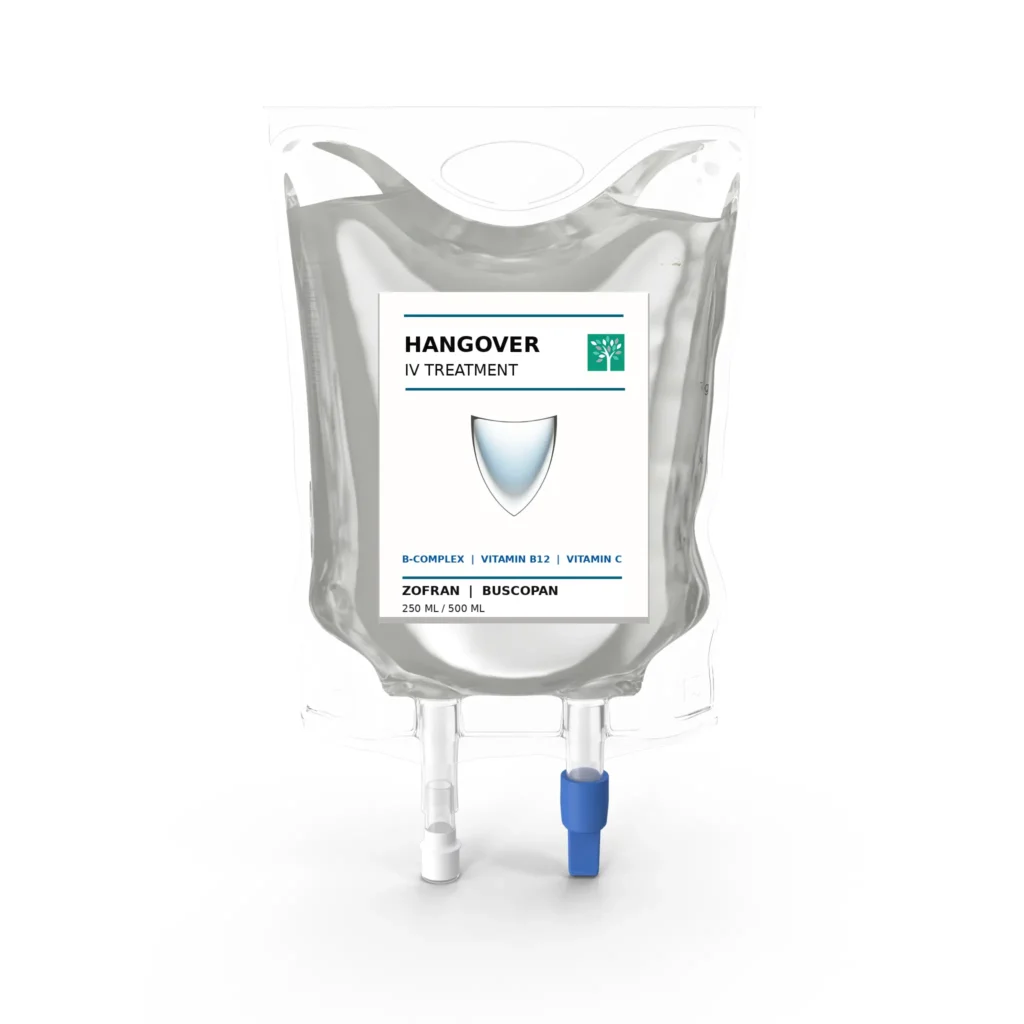
The reference formulation lists three vitamin-based ingredients alongside anti-nausea and anti-inflammatory components. Vitamins contribute to normal physiological functions, while anti-nausea and anti-inflammatory agents involve medication use and require individual medical assessment of symptoms, contraindications and potential risks.
Involved in normal energy metabolism and nervous system function. Its nutritional role does not mean intravenous supplementation can accelerate alcohol metabolism.
Contributes to red blood cell formation, DNA synthesis and normal nerve function. It is an essential nutrient required by the body.
Involved in collagen synthesis and supports normal immune function and cellular antioxidant defence.
A medication component listed in the reference product formulation. It may be considered for nausea or vomiting symptoms when clinically appropriate. The specific medication, contraindications and potential drug interactions must be verified by a doctor.
A medication component listed in the reference product formulation. Depending on the medication, there may be gastrointestinal, kidney or bleeding risks, particularly after alcohol consumption or dehydration. Careful medical assessment is required.
BOOK A MEDICAL CONSULTATION
Interested in learning more about Hangover IV Wellness? At BMS Clinic, our doctors assess individual symptoms, health conditions and medication-related risks to help identify appropriate hydration, nutritional and medical support options.