Related articles

Experts share their insights on different health topics and how comprehensive healthcare solutions can treat different conditions to improve patient health.

An Overlooked Marker in Cancer Care: Do You Know Your Albumin Level?

In cancer care, most of the focus is placed on tumor markers, imaging results, or responses to treatment. Yet one often-overlooked blood marker—albumin—can quietly reflect a patient’s overall condition, prognosis, and even survival.
Though seemingly simple, this protein tells a deeper story about the body’s nutritional status, inflammation levels, and recovery capacity.

Read More »

RGCC Makes Nutritional Support a Data-Driven Decision—Not a Guessing Game

The wellness market is saturated with supplements—from vitamin C and D to herbal extracts and antioxidant blends.
Faced with overwhelming options, many people find themselves asking:
• “Do I really need to take all of these?”
• “Which one should I choose, and how much is enough?”
• “Are these supplements actually working for me?”
These questions point to the core issue:
Most people are making decisions about supplementation based on guesswork rather than science.
But in reality, nutritional support should be personalized, targeted, and data-driven.
This is where the RGCC Onconomics Plus test becomes a game-changer.

Read More »

Traditional Early Screening Looks for “Shape”, Onco-D-clare Identifies the “Source” — Which Do You Need?

When we talk about early cancer detection, most people think of imaging tests or tumor markers.
These tools are valuable for identifying structural abnormalities or elevated markers — in other words, when a disease has already begun to manifest.
But what if you could go one step earlier?
Before anything is visible or measurable, is there a way to understand your underlying genetic risk?

Read More »

Can RGCC Detect What Traditional Cancer Screenings Miss?

You may regularly undergo health checkups, including cancer markers and imaging scans.
Yet, it’s not uncommon to hear of individuals being diagnosed with cancer shortly after receiving “normal” test results. Why does this happen?
The truth is, traditional screenings, while essential, have their limitations.
Some risks remain hidden—undetectable by standard scans or blood markers—because they originate at a cellular or molecular level, far before tumors form.
This is where RGCC (Research Genetic Cancer Centre) testing plays a unique and valuable role.

Read More »

It’s Not That Your Supplements Don’t Work — It’s That Your Body Is Overloaded with Lead and Arsenic

Have you ever felt this way?
You’ve tried all kinds of supplements and skincare products…
But your skin remains dull, your mood is low, and your energy just doesn’t come back.
Despite your best efforts, brain fog, fatigue, and trouble concentrating persist.
Before you blame the products, consider this:
What if your body is overloaded with invisible toxins — like lead and arsenic?

Read More »

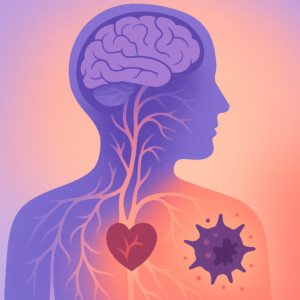
It’s Not Just Mental Stress: The Subtle Link Between Neurological Health and Cancer Recovery

When it comes to cancer recovery, most people focus on surgery, chemotherapy, radiotherapy, and nutrition. But one crucial piece of the puzzle is often overlooked: neurological health. Symptoms like anxiety, fatigue, or emotional instability are frequently brushed off as psychological responses — but they’re also signs that the nervous system is under strain. And that strain may directly impact the quality and pace of cancer recovery.

Read More »